

Or the Reality of the Dunning-Kruger Effect
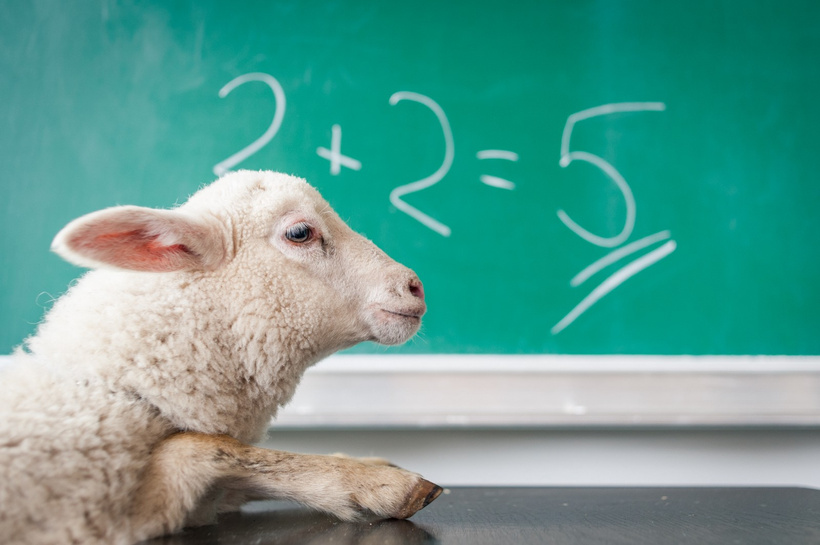
The whole problem with the world is that fools and fanatics are always so certain of themselves, and wiser people so full of doubts.
~ Bertrand Russell
There is a “scientific phenomenon” called Dunning-Kruger Effect which has become the darling of journalists around the world. It basically states that people who are really bad at something believe that they are actually good at it … and that people who are good at something tend to believe that they are bad at it.
OK, that’s actually an over simplification. While the first part of the statement is pretty much true, the latter needs more explanation. Competent people do indeed know that they are competent, but they also have a tendency to underestimate their achievements.
You see the Dunning-Kruger Effect all the time in older people who believe that they can drive better than everyone else on the road, yet they account for a significantly higher number of accidents and fatalities. (They are 16% likelier to cause an accident than adult drivers between 25 and 64 years old according to one study).
You see the effect in gun owners who believe that they are more safety conscious than non-gun owners, yet statistics show that they are consistently more likely to injure themselves or others with a firearm.
You see it in overweight people who believe they have a healthy lifestyle and you see it in political leaders who claim to be geniuses (when they are obviously not).
Mark Manson, a new York Times Best Selling Author, sums it up as follows: There are knowns and unknowns, and you can separate them into four quadrants:
-
Known-Knowns, things that we know that we know (like I know that I know how to brush my teeth).
-
Known-Unknowns, like I know that I don’t know a thing about advanced physics.
-
Unknown-Knowns, things that you forgot that you knew.
-
And Unknown-Unknowns, things that you don’t know that you don’t know.
The difference between an amateur and an expert is in how they live in those quadrants. Amateurs know what they know and have no clue about what they don’t. Experts live in the opposite set of corners.
For instance … an amateur knows some facts about science, but generally has no idea the scope of what they don’t know. So they simply make assumptions based on what they do know.
An expert understands that there is much that they don’t understand. They also have a tendency to seek factual knowledge rather than make assumptions. And as their knowledge base increases, so does their quadrant of Unknown-Knowns. They simply have a larger library of information stored inside themselves that they don’t even actively think about anymore. And because they “don’t know what they know”, that knowledge gets discounted when it comes to self-evaluation.
An expert tends to focus on questions, not answers. They seek knowledge, not absolutes. And they think that they “know very little” because they also understand all of the ways that they may be wrong.
We all have a friend, uncle, or perhaps a co-worker who lives this phenomenon. (And if you don’t know anyone like this, perhaps a little critical self-analysis is in order).
“Climate Change isn’t real because it snowed more than usual last year”.
This person took facts that they knew … it snows when it is cold … and made a leap of assumption when they asserted that you can’t have global warming and colder weather both at the same time. They didn’t know that they didn’t know the difference between weather and climate.
When most people learn about the Dunning-Kruger Effect they tend to think to themselves that most people are idiots and that they are not. They believe themselves to be critical thinkers. They understand that they don’t yet have all knowledge, so therefore they place higher than average on any knowledge scale because they are so self-aware.
But having knowledge of cognitive biases doesn’t make us any less susceptible to cognitive biases. Including the author of this article.
As I type these words, I’m fully aware that I don’t know everything about the subject … and yet I’m writing a treatise on the topic and starting to believe that my own assumptions equate to facts.
People don’t like uncertainty, and they certainly don’t like unanswered questions. So when faced with either, humans have the choice of doing deep research which may lead to yet more unanswered questions, or they can make blanket statements and simply call them answers.
“The effect is about us, not them,” Dr. David Dunning once wrote. “The lesson of the effect was always about how we should be humble and cautious about ourselves.”
There are some who don’t think the Dunning-Kruger Effect is real. That it may actually just be a data artifact. In an article from the McGill Office for Science and Society, Jonathan Jarry wrote this:
I was planning on writing a very short article about the Dunning-Kruger effect and it felt like shooting fish in a barrel. Here’s the effect, how it was discovered, what it means. End of story.But as I double-checked the academic literature, doubt started to creep in. While trying to understand the criticism that had been leveled at the original study, I fell down a rabbit hole, spoke to a few statistics-minded people, corresponded with Dr. Dunning himself, and tried to understand if our brain really was biased to overstate our competence in activities at which we suck … or if the celebrated effect was just a mirage brought about by the peculiar way in which we can play with numbers.Have we been overstating our confidence in the Dunning-Kruger effect?
His reasoning was based on a number of papers published in a mathematics journal called Numeracy. In them, the authors argued that the Dunning-Kruger effect was a mirage. That the same effect could be categorically shown using random data.
Which begs the question … is the Dunning-Kruger Effect really just a self-description? Does giving a name to the notion of not knowing that you don’t know what you’re talking about … (get ready for some circular logic) … really just mean that we collectively don’t know what we don’t know so we made up a diagnosis based on what we thought we did know … but didn’t?
Yea, my head hurts too.
But regardless of accepted scientific theory there is a great tendency in certain humans to avoid critical thinking and to assert facts that sound correct. Other humans accept these sound bites as gospel and spread it further, thinking themselves brilliant for knowing what others do not. We see it daily in our polarized online echo chambers and we constantly feel the effects negatively ripple throughout our lives.
Or did I just take a few facts and a big dose of assumption and write a few hundred words on the subject without knowing a damn thing about what I’m talking about?
Could go either way, I suppose.