
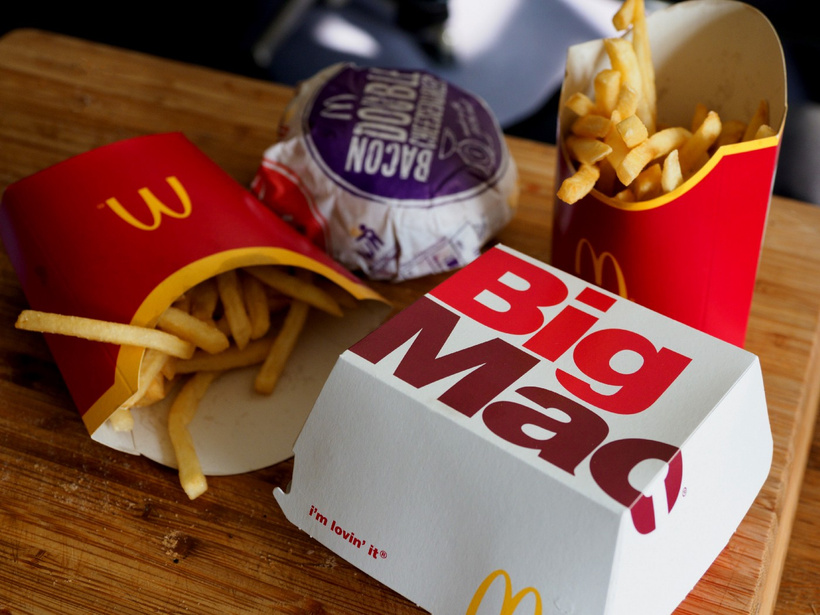
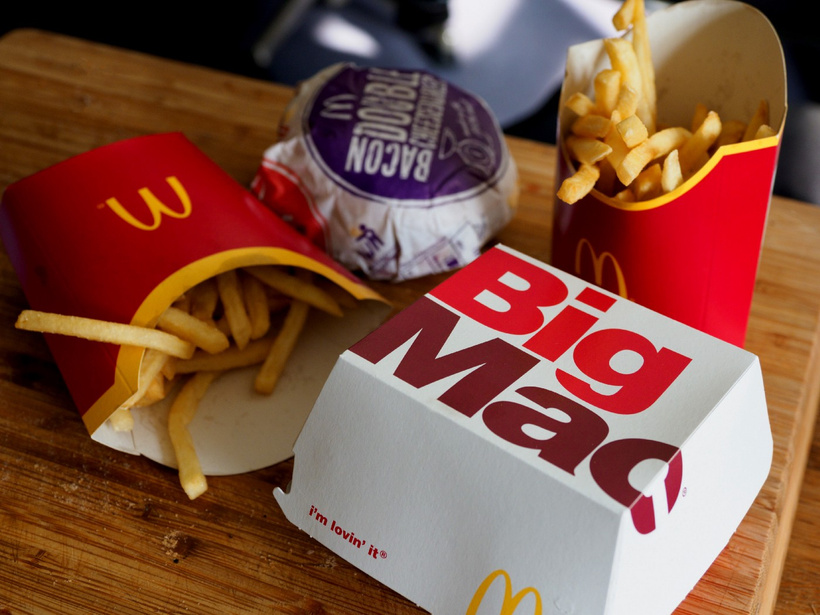
One evening as I was walking home in Barcelona, strolling past all of the local eateries and tapas joints, I was stopped in my tracks and I had to shake my head in utter disgust. A Burger King was there, despoiling the landscape.
“How horrible!”, I thought. “America at its ‘finest’, ruining the rest of the world, one street corner at a time”.
A few months later as I was driving my overly large truck down yet another busy suburban roadway, I passed by dozens and dozens of such eating establishments. All the usual culprits … McDonalds, Taco Bell, KFC … do you have any idea how many different fast food establishments there are?
Anyway, I was driving past all of these fine purveyors of deep fried malnutrition when I realized that I didn’t care in the least that they were there. I had absolutely no internal disgust at the thought of what they meant to my local landscape.
So … why?
Why was I so outraged and ashamed at what we export to the rest of the world as “American Food”, but inside our borders I just took as completely normal? My horror at what were doing to the innards of thousands of Spaniards didn’t match up with how I felt about what we were doing to ourselves.
Every American knows just how bad this stuff is. We tell ourselves “every now and then won’t hurt, we cook at home most of the time anyway”. And yet driving anywhere in this country we see a fast food establishment every three feet.
There is a serious disconnect here.
But this isn’t a story about the evil that lies within fast food. We’ve all read enough to know it exists. And we know that when we see it abroad that we’re exporting one of the worst parts of our culture. Nope, this tale is actually about the opposite, what is being brought to us from outside our dotted lines.
Let’s start with a certain American mindset before we get into the meat of the subject. Our compulsion to improve everything.
When you go to an ethnic restaurant … say Greek, Chinese, or even Mexican … you’re getting not Greek, Chinese, or Mexican food. We all know it. “They’ve adapted it for American tastes”, is the common knowledge. Because we don’t want to know what real Fajitas taste like.
By the way, Fajitas aren’t Mexican. Sure, they’re based on a traditional Mexican dish called tacos al carbon which consist of grilled meats and vegetables served in a soft tortilla. But fajitas were created in Texas, not Mexico.
But I digress.
Most Americans simply do not want to try non-Americanized food. Is it because we are rarely (if ever) exposed to anything else? Is it superiority? Let me describe a typical day in the life of food when I was living in Spain.
Breakfast … isn’t. You basically have coffee and perhaps bread. But the coffee isn’t that pale see-through liquid we create in our Mr. Coffee machines. It’s dark roasted and served with a roll or croissant that was baked in a bakery. That morning, by artisans who woke up at 3am to create it for you. And when you’re eating this ‘breakfast’ there is a good chance that you’re sitting in an outdoor cafe, talking with friends, and the whole process will take no less than an hour. And usually much, much longer.
Next you go shopping at the local markets because Costco doesn’t exist. Food doesn’t come in tubs, barrels, or in frozen blocks of ultra-processed “stay fresh” forever packages. And you’ll notice that I pluralized markets because you will go to more than one. Walking. You will go to the butcher, the veggie guy/gal, and a whole host of other speciality shops in addition to getting staples from the main market (which will be half the size of what we expect from a grocery store). You will do this either daily or every other day because you care about fresh food, not convenience nonsense that you can pull out in three weeks and nuke up.
Moving on. Lunch is the big meal of the day.
Assuming you’re going to eat out all day (and this isn’t the norm by the way, it just works better for this article with its shock value) you’re going to spend hours on this meal. Again, with friends. And probably beer, wine, and/or vermouth. Once you are seated there will be zero pressure for you to leave the table. It’s yours, for however long you want to use it. The servers don’t work for tips so they’re in no rush to move you along either. And whatever you order is going to be fresh because the restaurant didn’t have a Sysco truck drop off piles of prefab food the week before, they went and brought what was fresh and available that day.
Dinner will be at 10pm. It won’t be big because you probably had tapas (small appetizers) with friends a few hours before. And again, the whole point of the meal is to socialize and enjoy fresh offerings.
“But when do they work?”, you ask.
“In between”, I answer.
Spaniards work as hard, if not harder, than Americans do. They just have this mindset that it doesn’t have to be between two fixed points in time. Food and people aren’t things to shoehorn in between responsibilities. It’s the opposite, tasks and work fill the gaps between food and people.
And this isn’t just Spain, by the way. Sure the 10pm dinner bell is a little late by many country’s standards, but just about everywhere I’ve lived outside of the US has had the opposite focus when it comes to eating and living.
In 1986 McDonalds opened a restaurant in the heart of Italy. The location they chose was the Piazza di Spagna, at the foot of the Spanish Steps. And at the time it was the largest McDonald’s in the entire world.
Many Italians did not like this, especially a political activist named Carlo Petrini. Because of that intrusion he founded the International Slow Food movement, with the goal (in their own words) “to prevent the disappearance of local food cultures and traditions, counteract the rise of fast life, and combat people’s dwindling interest in the food they eat, where it comes from and how our food choices affect the world around us”.
I discovered Slow Food as a “thing” when I was strolling through Santorini Greece one afternoon. There was this artistic plaque on a wall of a happy, smiling snail with the English words “Slow Food” underneath. Now this was in 2004 so I didn’t have the ability to whip out my smartphone and query it, but I later found out what Slow Food International and the movement was all about … and it clicked with me like few other things had.
Basically it means to slow the you-know-what down and enjoy life through food. It encourages local production and the notion that fresher is better than “whatever you want should be available to you at anytime, we just need to ship it to you from wherever it is growing”.
This concept probably rings true with most people. How often do we tell a story of that one night with friends where we ate and drank into the wee hours, laughing and having a ball? It’s something we enjoy. And yet we as Americans reserve that type of evening as a “special occasion”. Why not make it an every day occurrence?
The answer is … because it’s hard here.
When a friend moved back to the states after living abroad, he couldn’t eat. Everything tasted processed. So he tried to replicate his recent life by self-cooking … and the stores wouldn’t cooperate.
Next time you walk down the aisles at Safeway or Piggly Wiggly take a hard look at what most of the store provides. Boxes and cans. Frozen “processed” foods. Have you ever heard of the expression “shop the edges”? It means that with the exception of those slivers of store acreage, the rest is sheer crap disguised as nutrition.
I know this is coming across as heresy against the American Way, but it’s not. (OK, maybe it is a little bit but work with me here). This isn’t about who builds the better life, it’s about learning and education.
Imagine living on Broad Street, Small City USA and you could shop for local and fresh ingredients with ease. Where you could go into a restaurant and not feel pressured to order the instant you sat down. Where you had time to enjoy company and your life was driven by pleasure and not work deadlines.
“But Rick”, you say. “We can do that already. There are small markets everywhere and we can just combine a work meeting with lunch!”.
NO, NO, NO!
That’s “Americanizing” the concept. My argument is that we should look anywhere and everywhere for inspiration and improvement and not assume that what we find is merely a good starting point. The leg work has already been done. Europeans have been living this lifestyle three times longer than our country has even existed. We don’t need to transform outside ideas into “our way of life”. We just need to be open-minded enough to seek the best life that we can enjoy, regardless of origin.
So … fast food. I so want to steer this conversation back towards the horrors of what it does to you. I wish … desperately wish … that I had the same knee jerk reaction to seeing the Golden Arches in Anywhere Kansas as I do in Old Town Europe. But everything is a work in progress and we need to start somewhere else.
Here’s your takeaway. Life … your life … has a purpose. It’s not to earn more money than Bob over there. Not to have the biggest house or the longest title on your business card. It’s to enjoy, savor, and relish life in this place we call Earth. And this can all start with food. Slow food.
Think about it.